The basics of SEO marketing for British businesses in 2026
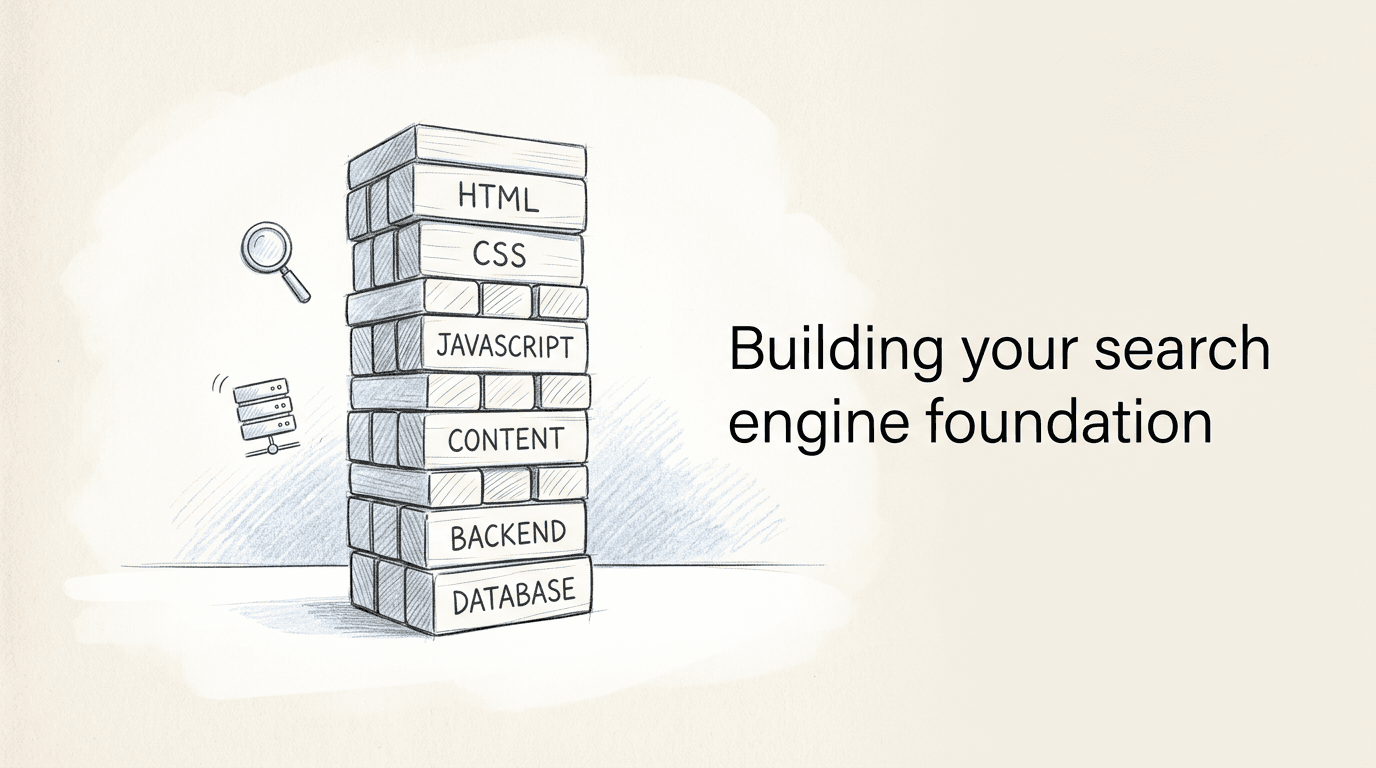
Many business owners treat search engine visibility as a technical overlay - a switch flipped by a developer just before a website goes live. The reality is that search algorithms evaluate a business based on its structural integrity, relevance, and digital authority long before a customer ever types a query. When a site launches without these foundational mechanics baked into its architecture, no amount of retrospective keyword targeting will force it into the primary search results. Understanding the basics of SEO marketing requires dismantling the assumption that visibility is bought; it is built through technical compliance, precise content architecture, and verified regional authority.
Quick Summary
Search engine optimisation is the systematic process of aligning a website's technical infrastructure, content architecture, and external authority signals with search engine algorithms to capture qualified traffic. Rather than merely inserting keywords, it requires structuring data so crawlers can easily understand and categorise a business's commercial offering.
- Technical infrastructure, including server speed and indexability, dictates whether a site can be crawled.
- Content must be mapped to specific stages of the buyer journey, answering distinct search intents.
- External authority is built through verified mentions, not bulk directory submissions.
- Unchecked technical errors, like cannibalisation and thin content, actively suppress rankings.
- Success is measured by commercial outcomes and lead generation, rather than vanity metric traffic.
Table of Contents
- The core mechanics behind the basics of SEO marketing
- Why generic intent targeting misdirects your traffic
- How digital authority dictates algorithmic trust
- Content architecture and semantic relevance
- Comparing traditional retainers against platform automation
- Three distinct visibility failures that look identical
- Why commercial outcomes outrank visibility metrics
- FAQ
- Recommended Reads
The core mechanics behind the basics of SEO marketing
At its simplest, search engine visibility requires an algorithm to find, render, and categorise your website's pages. This process begins with the crawl phase. Search engines dispatch automated bots to navigate the web through links, but these bots operate on strict resource limits known as a crawl budget. If your website wastes this budget on slow-loading pages, broken links, or infinite pagination loops, the bots will leave before processing your most valuable commercial pages.

The foundation of this technical compliance relies heavily on server performance. When a user requests a page, the server's Time to First Byte (TTFB) acts as the initial quality signal. Enterprise-grade hosting environments that maintain average response times below 120ms with 99.99% uptime allow search engine crawlers to process site architecture efficiently. Conversely, shared hosting platforms that delay responses force crawlers to abandon the site prematurely. You can establish your current performance baseline and identify these bottlenecks by running a free site audit to see exactly how search engines interact with your infrastructure.
Once a page is crawled, it must be indexed. This is where site owners frequently inadvertently block their own progress. A misconfigured robots.txt file, or a rogue "noindex" tag left over from a staging environment, serves as an absolute barrier to entry. Furthermore, modern websites relying heavily on client-side JavaScript rendering introduce a two-wave indexing delay. Search engines must first parse the basic HTML, and only later, when computing resources allow, render the JavaScript to see the final content. If your primary navigation or core product descriptions are locked behind unrendered scripts, the algorithm cannot evaluate them.
Understanding these mechanisms gives you immediate control over your digital footprint. Before writing a single blog post or redesigning a landing page, you must verify that your technical foundation is sound. Check your Google Search Console coverage report. If you see a high volume of pages categorised as "Crawled - currently not indexed" or "Discovered - currently not indexed", your server is either refusing connections under load, or the algorithm has deemed your page content too thin to warrant inclusion in its database.
Why generic intent targeting misdirects your traffic
A fundamental error in understanding what seo involves leads businesses to chase high-volume global terms instead of buyer-ready regional traffic. A manufacturing firm in the Midlands does not need to rank globally for the phrase "steel fabrication"; it needs to be the definitive answer for procurement managers searching for "commercial steel fabrication contractors UK". The former generates vanity traffic from students researching metallurgy in other time zones; the latter generates commercial enquiries.
Search engines categorise queries into specific intents: informational (seeking knowledge), navigational (seeking a specific website), and transactional (ready to purchase). When you examine the search engine results pages (SERPs) for a particular term, the algorithm explicitly tells you what intent it has assigned to that phrase. If a search for "accounting software" returns nothing but comparison lists and editorial reviews, the algorithm has decided the user is in the research phase. Attempting to force a product sales page into that specific SERP will fail, regardless of how well-optimised the page is, because it violates the established user intent.
For British SMEs, capitalising on regional intent requires localising the signals your website broadcasts. This goes beyond merely placing a city name in a page title. It requires establishing a consistent Name, Address, and Phone Number (NAP) footprint across the web. It means structuring your service pages to explicitly state the areas you cover, the regulatory standards you adhere to, and the specific problems you solve for local buyers.
Practical rule: Before targeting any search phrase, type it into an incognito window and classify the top five results by format. If the results are long-form guides, you must write a guide; if they are product categories, you must build a category page. Never try to rank a format that the algorithm has not already endorsed for that query.
How digital authority dictates algorithmic trust
Search engines cannot manually verify the quality of every business on the internet. Instead, they rely on a decentralised system of peer review: the hyperlink. When one reputable website links to another, it passes a fraction of its own authority, acting as a digital endorsement. This transfer of equity is the backbone of algorithmic trust, and it remains one of the most critical seo fundamentals.

However, not all endorsements carry equal weight, and acquiring the wrong type of links actively damages your domain. In the past, marketers attempted to manipulate algorithms through bulk submissions to low-quality directories, automated forum profiles, and paid link schemes. Modern algorithms evaluate links semantically. A link from a respected UK industry publication to your business carries immense weight because the context is highly relevant. A link from an unrelated overseas blog carries no weight and, if part of a larger pattern, triggers manual penalties that remove your site from the search results entirely.
Building genuine authority requires earning placements on tier-1 networks and securing high-quality UK authority mentions. This involves digital PR, contributing expert commentary to industry journals, and creating reference material that other webmasters naturally want to cite. Furthermore, maintaining this authority requires constant vigilance. Competitors or malicious actors occasionally point toxic link spam at successful domains in an attempt to trigger an algorithmic downgrade. Implementing real-time security monitoring to disavow malicious associations is as vital as acquiring new endorsements.
To evaluate your own authority profile, examine your referring domains rather than your total link count. Ten contextual links from established British trade associations will continually outperform one thousand links from automated web 2.0 profiles. If your visibility has suddenly dropped, your first technical check should be reviewing your backlink profile for a sudden influx of irrelevant, exact-match anchor text links.
Content architecture and semantic relevance
Visibility is not built on individual pages acting in isolation; it is built on the semantic relationship between pages. This structural approach is central to any thorough seo explanation. When a search engine evaluates your domain, it looks for topical authority - a comprehensive mapping of a subject that proves your expertise.
This requires organising your website into clear silos. A hub-and-spoke model is the most effective way to architect this structure. The "hub" is a comprehensive pillar page covering a broad topic - for example, "Commercial Property Insurance". The "spokes" are detailed sub-pages exploring specific facets of that topic, such as "Liability Coverage for Warehouses" or "Retail Premises Insurance Limits". Crucially, every spoke must link back to the central hub, and the hub must link out to every spoke. This internal linking structure creates a closed-loop of relevance, passing authority efficiently and proving to the crawler that your domain covers the subject comprehensively.
Where businesses fail is in creating flat, unlinked architectures. They publish dozens of blog posts that sit orphaned in an archive, never linking to the commercial service pages they are meant to support. If a page has no internal links pointing to it, search engines view it as unimportant and allocate less crawl priority to it.
Furthermore, the content on these pages must satisfy entity-based algorithms. Search engines no longer match strings of characters; they match entities - known concepts, places, and things. If your page is about "mortgage brokering", the algorithm expects to see semantically related entities like "interest rates", "FCA compliance", "loan-to-value ratios", and "underwriting". The absence of this supporting vocabulary signals that the content lacks the depth expected from an industry expert.
Comparing traditional retainers against platform automation
The methodology businesses use to implement these strategies has shifted dramatically. Historically, securing comprehensive technical management, content generation, and authority building required assembling a fragmented team of specialists. Today, the market is divided between traditional agency retainers, fragmented freelance models, and consolidated AI-driven platforms.
Understanding which approach suits your operational maturity requires comparing the structural costs, risk mitigation, and technical capabilities of each model.
| Execution Model | Structural Cost | Risk Profile | Technical Capability |
|---|---|---|---|
| Traditional Agency Retainer | High (Often exceeding £4,150/month for full-service fractional teams) | High (Long-term contracts with varied performance guarantees) | High, but reliant on manual execution and variable account manager skill. |
| Fragmented Freelance DIY | Medium (Paying separately for content, security, and link building) | Very High (Lack of cohesive strategy; high risk of contradictory implementations) | Variable, often resulting in isolated fixes that do not compound. |
| AI-Driven Infrastructure | Highly Efficient (Typically structured around low monthly subscriptions, e.g., £22.99/mo) | Low (Often secured by rapid-growth refund policies based on traffic data) | Enterprise-grade, featuring automated technical compliance, real-time security, and regional intent optimisation. |
Traditional retainers suit enterprise organisations that require extensive, bespoke, multi-stakeholder approval processes. However, for SMEs and growth-stage startups, the overhead of a traditional agency heavily dilutes the return on investment. Consolidated platforms that combine enterprise hosting, automated publishing, and authority building into a single ecosystem offer a more scalable route to market dominance. If your budget is consumed entirely by management fees rather than link acquisition and technical infrastructure, you are funding an agency's overhead rather than your own digital asset.
Three distinct visibility failures that look identical
When traffic plateaus or declines, the symptom always looks the same: a drop in organic sessions. However, the root cause is rarely a blanket algorithm penalty. Most visibility issues stem from specific structural failures. Applying a generic solution, like writing more content, to a structural failure is a waste of capital. Here are three distinct problems that require entirely different repairs.
1. Keyword Cannibalisation
This occurs when multiple pages on your domain compete for the exact same search intent. Instead of one page ranking highly, the search engine becomes confused about which page is the primary resource, causing both to rank poorly. This frequently happens when a business writes multiple blog posts targeting a core service offering without canonicalising them.
How to check: Search Google using site:yourdomain.co.uk "your target keyword". If multiple service pages or similar blog posts appear competing for the top spot, you have cannibalisation.
The fix: Consolidate the competing pages into one authoritative, long-form guide, and implement 301 redirects from the redundant URLs to the new primary page.
2. Index Bloat from Parameter URLs
E-commerce sites and complex service directories often generate hundreds of dynamic URLs through filtering and sorting (e.g., ?sort=price_asc or ?category=shoes&color=red). If search engines crawl and index these parameters, they see thousands of near-identical pages. This dilutes your domain's authority and burns through your crawl budget.
How to check: Open Google Search Console and compare the number of "Valid" pages in the index against the actual number of unique pages you have published. If the index count is wildly higher, parameter bloat is occurring.
The fix: Implement strict canonical tags pointing back to the core category URL, and configure your robots.txt file to disallow crawling of dynamic tracking or sorting parameters.
3. Diluted Local Citation Profiles
For businesses reliant on regional traffic, a mismatch in your core business data across the web fractures your authority. If your business is listed at one address on a regional chamber of commerce directory, but a different address on an older industry portal, search algorithms lose confidence in your geographic relevance. How to check: Perform a manual search for your old business addresses or previous trading names alongside your current phone number. The fix: Conduct a comprehensive citation cleanup, ensuring that your Name, Address, and Phone Number (NAP) match your Google Business Profile exactly, down to the formatting of the street abbreviation.
Practical rule: Never diagnose a traffic drop by looking at overall site sessions. Always isolate the drop to a specific page or a specific device type within your analytics platform. A sudden drop in mobile traffic while desktop remains stable points to a responsive rendering issue, not a content problem.
Why commercial outcomes outrank visibility metrics
The final layer of understanding seo principles is shifting your measurement criteria from vanity metrics to commercial outcomes. Ranking in the first position for a broad industry term feels validating, but if that term drives zero form fills, telephone calls, or product sales, the optimisation effort has failed commercially.
Traffic is merely a leading indicator; qualified sessions and conversion rates are the true metrics of success. Modern optimisation strategies must align with rigorous commercial frameworks. If you are investing in infrastructure, content, and authority, you must establish a strict timeline for returns. Performance data typically establishes clear trends within a 75-day window. If organic traffic and lead volume remain stagnant after executing a technically sound strategy for two and a half months, the keyword targeting is likely mismatched with the domain's current authority ceiling.
This is why businesses are increasingly moving towards platforms that offer definitive risk mitigation - such as no-growth refund policies - rather than open-ended agency retainers. By tying the digital infrastructure directly to commercial growth targets, British SMEs can build a robust, secure, and highly visible online brand presence without exposing themselves to the financial drain of speculative marketing.
To see how an integrated, AI-driven approach can streamline this entire process for your own domain, explore the capabilities at RapidWombat - AI-Driven SEO for UK Businesses, where technical compliance, content mapping, and network authority are managed within a unified ecosystem.
FAQ
What is the difference between technical SEO and content marketing?
Technical SEO ensures a website can be crawled, rendered, and indexed efficiently by search engines, focusing on server speed, architecture, and code. Content marketing focuses on producing the semantic information that answers the user's specific query once they land on the page. Both must work together to achieve visibility.
How long does it take to see commercial results from organic search?
While initial indexing of new content can happen within hours, significant shifts in domain authority and competitive ranking typically take between 60 to 90 days to materialise in commercial lead volume, provided the technical foundations are sound.
Why are my web pages indexed but not ranking?
If a page is indexed but sits on the fifth page of results, it usually lacks the necessary external authority (backlinks), fails to match the precise search intent of the user, or is competing against stronger, more comprehensive semantic content on competitor domains.
Do small businesses need to pay for ongoing link building?
Acquiring authority is an ongoing requirement, but buying raw links is a penalised tactic. Businesses must invest in ongoing digital PR, tier-1 network placements, and the creation of authoritative content that naturally earns citations from verified UK industry platforms.
Recommended Reads
- Review the data handling and compliance commitments at RapidWombat - AI-Driven SEO for UK Businesses.
- Understand the terms of service engagement for RapidWombat - AI-Driven SEO for UK Businesses.