The Basics of SEO: Core Principles for Beginners
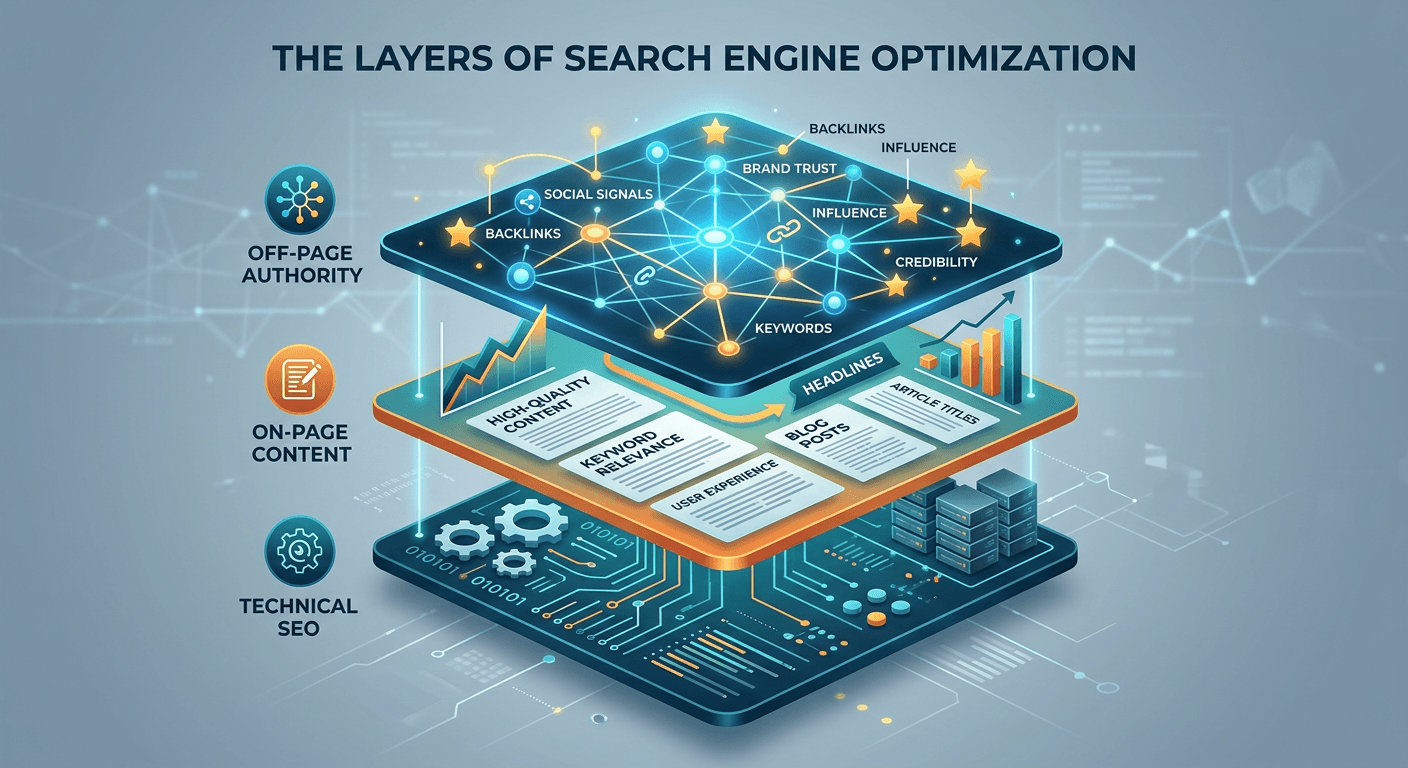
Understanding search engine optimization represents the foundation of digital visibility, serving as the essential bridge between content creators and their target audience. By mastering the basics of seo, you gain the ability to structure information in a way that search algorithms can interpret, categorize, and rank effectively. This process is not about gaming a system, but rather about optimizing the user experience to ensure your content reaches those who actively seek your expertise.

Quick Summary {#quick-summary}
Search Engine Optimization (SEO) is the systematic practice of refining a website's technical structure, content quality, and authority to increase organic traffic. It involves aligning web pages with search engine ranking algorithms to improve visibility for relevant queries. Effective implementation requires ongoing monitoring and adherence to industry best practices.
- Technical site health affects crawlability and indexation.
- Content relevance is determined by keyword intent and utility.
- Authoritative backlink profiles signal credibility to search engines.
- Consistent performance monitoring is essential for sustained growth.
Table of Contents {#table-of-contents}
- Understanding SEO Foundations
- Technical SEO Mechanics
- Content Relevance and Intent
- Authority and Off-Page Signals
- Comparison Table of SEO Dimensions
- Real-World Insights and Practical Strategy
- FAQ
- Recommended Reads
Understanding SEO Foundations {#understanding-seo-foundations}
At its core, understanding seo requires a shift in perspective from viewing a website as a brochure to viewing it as a functional database of information. Search engines employ automated programs known as crawlers or spiders that traverse the web, mapping the relationship between pages. Your objective is to make these relationships as clear as possible so that algorithms recognize your site as the most authoritative answer for specific search queries.
When delving into all about seo, it becomes clear that user intent is the primary driver of search ranking. Algorithms prioritize content that satisfies the user's specific need, whether that need is transactional, informational, or navigational. By focusing on seo fundamentals early in your development cycle, you ensure that every page serves a purpose, preventing the common issue of keyword cannibalization or thin, irrelevant content.
Technical SEO Mechanics {#technical-seo-mechanics}
Technical performance is the bedrock of search visibility. Even if your content is exceptional, if a search engine cannot access, read, or render your pages, your ranking potential is effectively zero. This encompasses elements such as XML sitemaps, robots.txt files, and the canonicalization of URLs to prevent duplicate content issues. Ensuring your site architecture is flat-meaning pages are only a few clicks away from the homepage-facilitates efficient crawling.
Modern technical standards now heavily favor page experience metrics. Google’s Core Web Vitals measure loading speed, visual stability, and interactivity. If your site performs poorly here, even high-quality content may struggle to compete. For those looking to identify these gaps, requesting a free site audit is a strategic step to uncover hidden bottlenecks that inhibit search performance.
Pro Tip: Prioritize mobile-first indexing; search engines evaluate your site based on how it renders on handheld devices, regardless of your desktop performance.
Content Relevance and Intent {#content-relevance-and-intent}
Content remains the most significant ranking factor. Modern seo principles demand that you move beyond simple keyword insertion. Instead, focus on semantic depth-covering topics comprehensively so that you satisfy the user's query without them needing to search elsewhere. This approach aligns with the principle of E-E-A-T (Experience, Expertise, Authoritativeness, and Trustworthiness).
When you create content, consider the searcher's journey. Use descriptive headings, logical hierarchy, and clear calls to action to guide the reader through the information. Avoid jargon-heavy, impenetrable prose; search engines favor content that answers queries directly and concisely. You can find more information regarding standard data practices to ensure your content presentation remains aligned with modern accessibility standards.
Authority and Off-Page Signals {#authority-and-off-page-signals}
Off-page SEO focuses on establishing your brand's reputation through external signals, primarily backlinks. A backlink functions as a "vote of confidence" from one site to another. However, not all votes are equal. A link from a high-authority, industry-relevant publication carries significantly more weight than a link from an obscure or unrelated domain.
Building an authoritative profile requires a long-term commitment to quality link-building or organic acquisition. Engaging with your industry peers, creating data-driven studies that others want to cite, and maintaining strict privacy policies on your platform can help foster the trust necessary to attract high-value links naturally. Always prioritize the quality and relevance of the source over the sheer volume of links.
Comparison Table of SEO Dimensions {#comparison-table-of-seo-dimensions}
| Dimension | Primary Focus | Success Metric | Key Impact |
|---|---|---|---|
| Technical SEO | Crawlability/UX | Core Web Vitals | Base site performance |
| Content SEO | User Intent/Relevance | Time on page/Bounce | Search ranking potential |
| Off-Page SEO | Authority/Trust | Domain Authority | Competitive ranking edge |
Real-World Insights and Practical Strategy {#real-world-insights-and-practical-strategy}
In practice, many beginners fail by attempting to optimize for search engines rather than humans. True mastery comes from striking a balance. Always start by addressing the primary intent of your audience, then refine the meta tags, URL structure, and internal linking to help search engines categorize that content. Internal linking, in particular, is an underutilized tactic; by linking to your cornerstone content from related articles, you distribute authority across your site.
Consistency is the silent engine of success. Search engines prioritize websites that show regular updates and a commitment to maintaining current information. Before making significant structural changes, check your general terms of service and site architecture to ensure that your path forward doesn't conflict with established site policies.
FAQ {#faq}
How long does it take for SEO efforts to show results?
SEO is a long-term strategy. While technical fixes can yield quick improvements in site speed and crawlability, content-driven ranking improvements typically take three to six months depending on industry competitiveness.
Do I need to be a programmer to handle technical SEO?
You do not need to be a developer, but you must understand the basics of site architecture, such as how to read a sitemap and manage meta headers. Many CMS platforms handle the heavy lifting for you.
Is keyword stuffing still a valid strategy?
No. Keyword stuffing is considered a black-hat practice and will likely result in manual penalties from search engines. Focus on natural language and topical coverage instead.
Why is mobile-friendliness important?
Search engines use mobile-first indexing, meaning they primarily crawl and index your site based on its mobile version. A poor mobile experience directly leads to lower rankings.