Best WordPress SEO Plugins for 2026 to Boost Your Search Performance
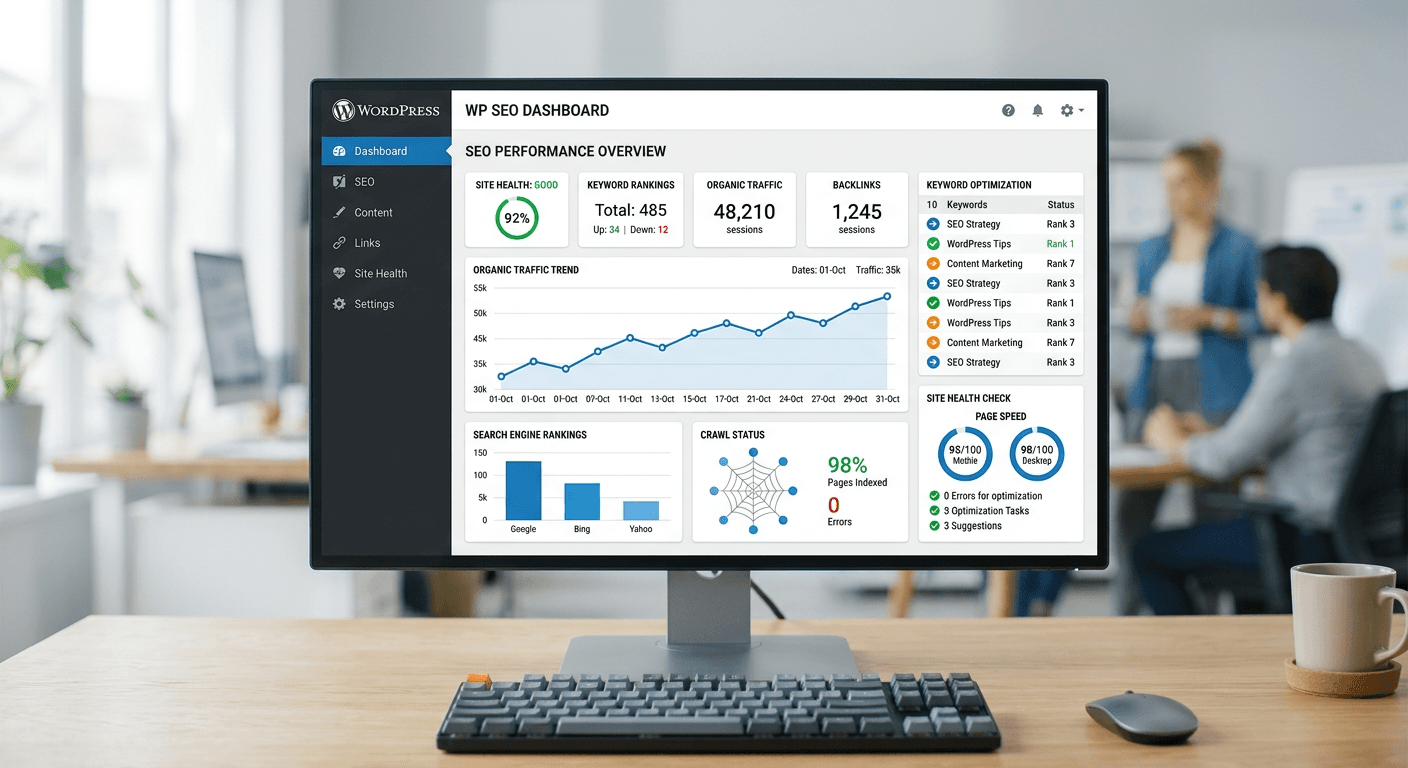
Optimising a website for search engines requires a strategic approach to technical configuration, content structure, and performance metrics. When managing a site built on the WordPress ecosystem, selecting the right tools can significantly reduce the manual effort involved in maintaining search visibility. By leveraging modern wordpress seo plugins, site owners can automate complex tasks such as schema markup implementation, XML sitemap generation, and internal linking management.

Quick Summary {#quick-summary}
WordPress SEO plugins are software extensions designed to automate technical optimisation tasks, meta-data management, and search engine indexing for WordPress-powered websites. These tools simplify complex SEO workflows, ensuring content meets modern search quality standards.
- Improved metadata management for titles and descriptions.
- Automated generation of XML sitemaps for search crawlers.
- Enhanced technical infrastructure through schema markup.
- Real-time readability and keyword density analysis.
- Core web vital performance monitoring for search rankings.
Table of Contents {#table-of-contents}
- Top-Tier WordPress SEO Tool Categories
- Comparison of SEO Optimization Approaches
- All-in-One SEO Frameworks
- Technical SEO and Performance Plugins
- Content Optimisation and Keyword Analysis
- How to Choose the Right SEO Solution
- FAQ
- Recommended Reads
Top-Tier WordPress SEO Tool Categories {#top-tier-wordpress-seo-tool-categories}
Not all SEO solutions serve the same purpose. While some users prefer an all-in-one suite to manage every aspect of their site's visibility, others opt for a modular approach, selecting specific plugins to address performance, link management, or technical site architecture. Understanding the distinction between these categories is essential for avoiding plugin bloat and maintaining high site speed.
Professional site managers often perform a free site audit to determine which areas of their architecture require immediate attention. Whether focusing on link health or content relevance, the goal remains the same: to create a seamless experience for both search engine crawlers and human visitors. Before installing any new software, ensure your environment is secure and that your chosen plugins are compatible with your current theme and hosting infrastructure.
Comparison of SEO Optimisation Approaches {#comparison-of-seo-optimisation-approaches}
| Approach | Best For | Pros | Cons | Target Audience |
|---|---|---|---|---|
| All-in-One Plugins | Beginners | Centralised management | High resource usage | Small business owners |
| Modular Suites | Performance | Lightweight, customisable | Complexity in setup | Developers and agencies |
| SaaS-Integrated | Advanced Growth | Off-server data processing | Recurring subscription costs | Scaling enterprises |
All-in-One SEO Frameworks {#all-in-one-seo-frameworks}
Comprehensive frameworks aim to provide a single interface for managing every technical SEO requirement. These tools typically handle global settings, site-wide schema, and individual page metadata, acting as a command centre for your online visibility efforts.
- Pros: Streamlined UI, handles most technical basics out-of-the-box.
- Cons: Can introduce unnecessary code if features remain unused.
- Use Case: Ideal for content-heavy sites where standardisation of metadata across thousands of posts is critical.
These tools often include features that assist in managing seo for wordpress keywords directly within the post editor, allowing for granular control over how search engines interpret individual pages.
Technical SEO and Performance Plugins {#technical-seo-and-performance-plugins}
Technical performance is a critical ranking factor in modern search algorithms. Plugins in this category focus on core web vitals, minification of resources, and site architecture. By reducing server response times and managing image assets, these tools ensure that your site remains lightweight and fast.
- Pros: Directly addresses Google's speed and security requirements.
- Cons: Often requires a deeper understanding of technical configuration.
- Use Case: Best for established sites where site speed has become a bottleneck for organic growth.
Content Optimisation and Keyword Analysis {#content-optimisation-and-keyword-analysis}
Content remains the primary driver of search traffic. Plugins that focus on keyword analysis help writers maintain focus during the content creation process. They often provide insights into wordpress tags for seo and suggest internal linking opportunities to build topical authority.
- Pros: Encourages consistent content quality and structural integrity.
- Cons: Can lead to over-optimisation if users follow algorithmic suggestions too strictly.
- Use Case: Essential for bloggers and content marketing teams focused on topical dominance.
How to Choose the Right SEO Solution {#how-to-choose-the-right-seo-solution}
Choosing the right tools requires an audit of your current site architecture. Start by examining your site's health and identifying which gaps currently exist. If your metadata is inconsistent, an all-in-one tool is the best starting point. If your site suffers from slow load times, focus on performance-oriented plugins instead.
Always prioritise stability. Before deploying a new plugin on a live site, test it in a staging environment. Regularly review your site’s performance using a free site audit to ensure that your SEO strategy is yielding measurable results in organic traffic growth rather than just increasing complexity.
FAQ {#faq}
- Question: How many SEO plugins should I use on my WordPress site?
- Answer: Aim for the minimum number of plugins required to achieve your goals. Combining an all-in-one suite with one or two specialised performance tools is usually sufficient for most websites.
- Question: Are free SEO plugins as effective as premium ones?
- Answer: Many free plugins provide excellent fundamental features. However, premium versions often include advanced schema support, priority support, and deeper analytical integrations which can be beneficial for larger sites.
- Question: Does installing SEO plugins guarantee a higher ranking?
- Answer: No. Plugins provide the tools to optimise your site's structure and metadata, but high rankings still depend on the quality, relevance, and authority of your content.