8 Ways to Make seo marketing Pull Its Weight Across Your Digital Strategy
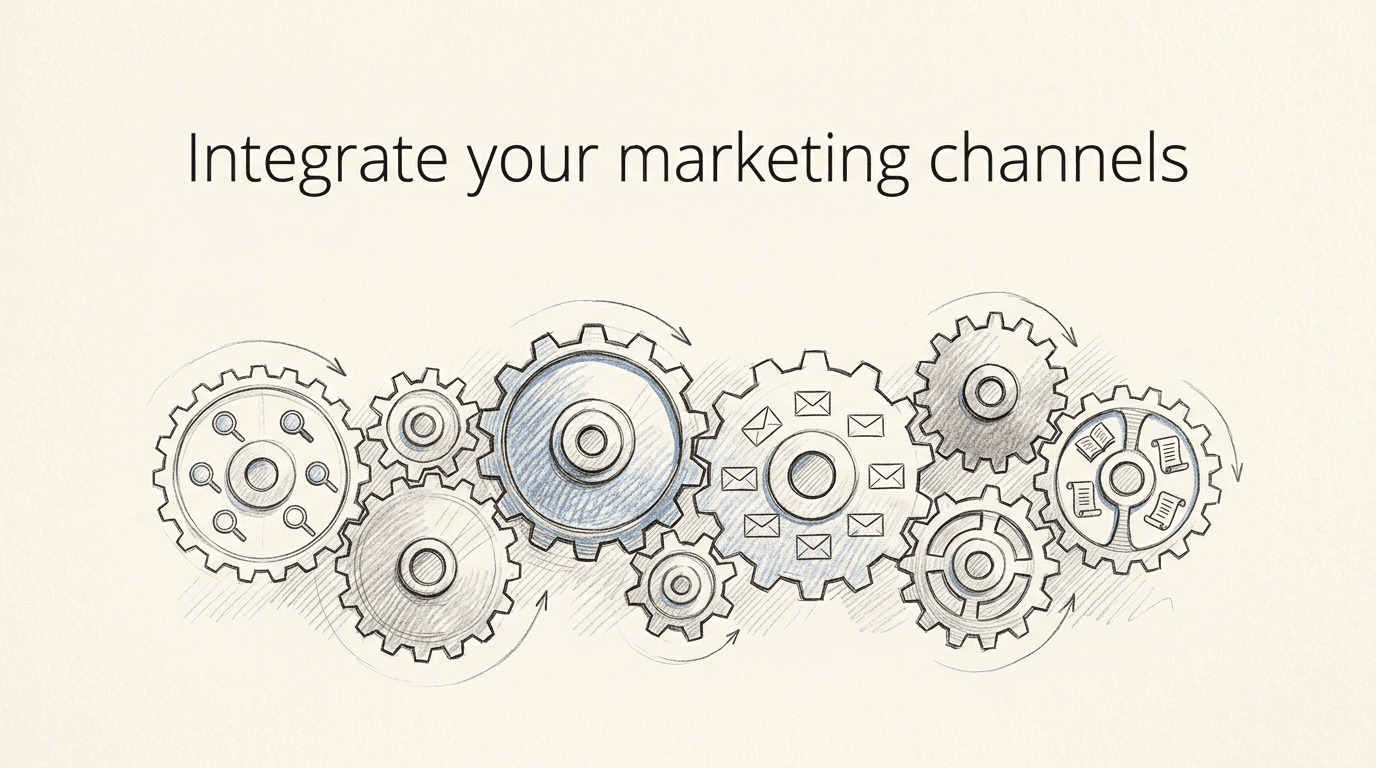
Most UK teams do not have an SEO problem in isolation. They have a coordination problem: paid search chases one set of terms, content answers another, CRM emails push a third message, and the website buries the pages that should carry the brand. That is where seo marketing usually stalls - not because nobody is doing work, but because each channel is optimised for itself rather than for shared growth.
Quick Summary
seo marketing works best when it is treated as part of the wider digital system, not as a standalone traffic task. The practical job is to align search intent, messaging, site structure, content, measurement, and conversion paths so SEO supports brand growth rather than merely adding visits.
- Treat SEO as a planning input for every channel, not a clean-up task after campaigns launch.
- Judge each tactic by two criteria: shared commercial intent and how easily another channel can use the output.
- Strong integration usually beats isolated channel wins.
- Brand growth comes from consistent signals across search, content, email, paid media, and the website itself.
Table of Contents
- The right lens is shared intent and reusability
- 1. Start with one search-intent map, not five channel plans
- 2. Build campaigns around pages that can rank and convert
- 3. Use paid media to test messaging before you scale SEO content
- 4. Make brand, PR and SEO share the same evidence
- 5. Connect email and CRM data back to search behaviour
- 6. Fix technical issues that block every other channel
- 7. Measure contribution, not channel vanity
- 8. Treat local and international growth as different search systems
- Choose the integration point that matches your bottleneck
- FAQ
- Recommended Reads
The right lens is shared intent and reusability
The useful way to compare these eight approaches is not by asking which one is most fashionable. It is by asking two harder questions.
First, does this connect to the same commercial intent the rest of your marketing is trying to capture? Second, can another channel reuse what comes out of it?
That matters because integrated seo and marketing stops being efficient the moment every team creates its own version of the customer journey. A search term map that nobody in paid media sees is underused. A campaign landing page that cannot rank is over-dependent on ad spend. A strong webinar that never becomes a search page, email sequence, and sales resource wastes most of its value.
For British SMEs and growth-stage firms, this is often the practical dividing line between web marketing and seo that compounds and activity that must be repurchased every month.
Practical rule: If a proposed SEO task cannot improve at least one other channel - paid, email, PR, sales enablement, or on-site conversion - question whether it deserves priority.
1. Start with one search-intent map, not five channel plans
This is the foundation for teams whose content, paid media, and website all exist, but do not reinforce one another. A search-intent map groups queries by the job the user is trying to get done: compare options, solve a problem, validate a supplier, check credibility, or buy now.

Mechanically, this means taking your core terms and sorting them into intent clusters that matter commercially, then mapping each cluster to an asset type and a stage in the buying process. Informational searches may belong to explainers, comparison pages, FAQs, or category primers. High-intent searches may need service pages, product pages, pricing support, or trust-heavy landing pages. The important part is that every channel uses the same map.
In practice, this changes meetings. Paid search stops inventing ad groups in isolation. Social and email stop promoting content just because it exists. Sales can tell marketing which phrases show up in serious enquiries rather than casual browsing. That is where seo marketing basics become useful rather than academic.
The map exposes channel conflict before budget does
The biggest advantage is not keyword coverage. It is conflict detection. If one cluster says “cost reduction” while another says “premium service”, the issue is positioning, not metadata. If your high-conversion leads consistently enter through bottom-funnel pages but your content calendar is packed with broad awareness topics, you have found the mismatch.
Check this today by reviewing the last 20 pieces of published content and asking which intent cluster each supports. If several cannot be tied to a buying question, they are probably serving production targets rather than strategy. Teams that skip this should expect duplicated work and mixed signals.
2. Build campaigns around pages that can rank and convert
Many campaigns fail because the asset was designed only for media buying or only for search. In integrated seo digital marketing, the page has to do both jobs where possible: earn discovery and carry action.
That usually means a page structure with a clear primary query, subtopics that answer decision-stage objections, and conversion paths that fit the traffic source. Organic visitors often need more context than branded returning traffic. Paid visitors may arrive colder but more narrowly targeted. The right page can absorb both if it is built around a genuine decision, not a slogan.
The mechanism is straightforward. Search visibility improves when the page has enough topical completeness, crawlable structure, internal links, and useful copy to answer the query. Conversion improves when the page aligns with the promise that brought the user there and removes friction - weak proof, hidden pricing logic, vague outcomes, or buried contact routes.
Traffic lands better when the destination was designed first
The honest lesson is that campaign planning should often start with the destination page, not the ad creative or blog title. If you cannot point to the page that will hold the demand, you are not ready to scale traffic.
A fast check is to open your top three strategic landing pages and ask whether each one could plausibly rank for a useful non-branded query and convert a first-time visitor. If the answer is no, the page is channel-specific in the wrong way. For a wider view of how platforms frame that integration work, see RapidWombat - AI-Driven SEO for UK Businesses.
This is also where a free site audit https://rapidwombat.com/audit can help identify pages whose technical setup or structure blocks both visibility and conversion.
3. Use paid media to test messaging before you scale SEO content
This approach suits teams producing a lot of content but unsure which angle the market will actually respond to. Organic search is powerful, but content is slower to validate than ad copy, creative variants, and landing page tests.
Testing messaging goes beyond simply running PPC for SEO. Run tightly matched paid campaigns against the same core proposition you plan to build into search-led pages. Test whether users respond better to cost, speed, compliance, quality, convenience, or outcome framing. Watch not just click-throughs but downstream actions: scroll depth, enquiry quality, demo requests, or assisted conversions.
In google seo marketing discussions, people often pretend the channels are separate because attribution tools split them into boxes. Buyers do not. They compare claims across every touchpoint they see.
Paid clicks can save months of writing the wrong thing
The value here is speed. If the market ignores one message in paid tests, do not build six SEO articles around it and hope patience fixes the problem. Search can amplify a good proposition. It does not usually rescue a weak one.
The limit is obvious: paid testing costs money and can mislead if the targeting is broad or the landing page is poor. This suits firms with enough budget discipline to treat ads as a messaging lab rather than an endless traffic tap. Smaller businesses should still borrow the principle - validate the proposition before scaling content - even if the test volume is modest.
4. Make brand, PR and SEO share the same evidence
This is where many mature marketing teams leave value on the table. A strong report, case study, data point, customer story, or expert comment should not live in one channel only. It should support brand positioning, outreach, on-site authority, and search relevance at the same time.
Mechanically, one evidence asset becomes several linked outputs: a central page on your site, shorter supporting articles, newsroom or PR angles, sales collateral, and snippets for email and social. Search benefits because the core page can attract links, internal references, and topic depth. Brand benefits because the same proof appears consistently wherever prospects check you.
For UK businesses, this often matters in sectors where buyers need reassurance before they enquire - regulated services, B2B procurement, specialist professional work, or any category where generic marketing language is cheap and trust is not.
Authority grows faster when one proof point does three jobs
The claim here is simple: authority compounds when proof is centralised. If your strongest evidence exists only in a PDF, a sales deck, or a PR mention, search cannot use much of it. If it sits on a well-structured page supported by related content, every channel has something solid to point at.
Weak evidence remains weak however many times you repurpose it. Do not mistake formatting for credibility. Check whether your last major proof asset lives on a page that can be crawled, linked internally, and updated. If not, the brand team may be creating assets that search and sales cannot fully exploit.
5. Connect email and CRM data back to search behaviour
This is the piece most teams skip because SEO reports usually stop at the visit. That is too early. The search terms and landing pages that produce the best leads often do not look like the ones that produce the most sessions.

Tying landing pages, enquiry forms, lead stages, and CRM outcomes together reveals which content paths correlate with qualified pipeline, not just traffic. Even lightweight tagging can help. If a visitor entered on a comparison page, later downloaded a buyer guide, and then replied to a sales email, that sequence tells you more than rankings alone.
This is particularly useful for seo & marketing teams selling considered purchases. In those journeys, a search visit may only introduce the brand. Email then nurtures, sales validates, and direct return visits close the loop.
The best keyword signal may arrive after the first visit
Once CRM feedback enters the picture, SEO planning changes. You stop chasing terms that look impressive in reporting but attract weak-fit leads. You start favouring content that pre-qualifies, even if it brings fewer users.
The catch is data discipline. If forms are inconsistent, attribution windows are unrealistic, or sales notes are unusable, this becomes guesswork with extra steps. Check one thing today: can you trace at least a handful of recent qualified leads back to their first meaningful landing page? If not, your search programme is probably flying half blind.
6. Fix technical issues that block every other channel
Technical SEO is often described as if it exists for rankings alone. In practice, many technical faults damage the whole digital system. Slow pages waste paid clicks. Broken canonicals split signals across duplicate campaign URLs. Weak internal linking buries commercially important pages. Poor mobile rendering hurts both engagement and conversion.
When search engines cannot efficiently crawl, interpret, and prioritise the site, and users cannot easily load and use it, every channel pays a tax. This is why technical work belongs in wider seo and marketing planning, not in a separate maintenance bucket.
Typical failure points include inconsistent indexation rules, JavaScript-heavy content that loads late, redirect chains after redesigns, and template decisions that produce thin or repetitive pages at scale. None of these are glamorous. All of them can drag on growth.
A slow, muddled site turns good marketing into expensive leakage
The practical advantage of technical work is leverage. One fix can improve discoverability, usability, and reporting accuracy at once. Unlike content production, it often removes friction from assets you already have.
Practical rule: Fix any issue that harms both crawlability and user journey before you commission more top-of-funnel content. More traffic into a broken experience is not growth.
Technical SEO cannot create demand where positioning is weak. It is foundational, not sufficient. If you need a policy context for how digital platforms handle business data, the RapidWombat privacy page sets out one example of how a UK-facing service presents that information.
7. Measure contribution, not channel vanity
If you want search to influence brand growth, reporting has to move past rankings and session counts. Useful measurement asks what search contributed to awareness, evaluation, pipeline quality, and conversion efficiency across channels.
Mechanically, that means looking at assisted conversions, branded search trends, return visits to SEO entry pages, lead quality by landing page type, and whether organic content reduces pressure on paid acquisition for the same topic cluster. It also means separating demand capture from demand creation. Search often does both, but not on the same page or in the same reporting window.
This is where seo marketing basics are frequently misunderstood. A page that rarely closes a sale directly may still do important work by introducing a category, answering objections, or earning the trust that a later branded visit cashes in.
Last-click reporting hides the real value of search
The claim is blunt because it needs to be: last-click models routinely under-credit search content that starts or supports the journey. If leadership only sees the final channel, investment drifts towards whichever touchpoint happens to collect the conversion.
Contribution models easily become hand-waving if they are too vague. Keep them tied to observable behaviour. Pick a few signals you can trust and review them consistently. If your reports only show rankings, impressions, and clicks, they are not yet telling the business what SEO is doing.
8. Treat local and international growth as different search systems
This matters for UK firms growing beyond one region or one country. Search intent does not transfer cleanly just because the service does. Terminology, trust markers, SERP features, and buying expectations shift.
The mechanism involves more than swapping place names or translating copy. You need market-specific keyword research, content hierarchy, metadata, internal linking, and proof points that make sense to the user in that geography. A page built for British search intent may underperform elsewhere even if the offer is the same.
For companies targeting multiple UK regions, this can be as simple as acknowledging that local searches in Glasgow, Cardiff, Manchester, or Belfast may carry different modifiers and expectations. For businesses expanding into EU markets, the gap is wider again.
What works in one market often fails by translation alone
The strength of this approach is realism. It stops teams from assuming one master content set can do every job. It also protects the brand from sending mixed signals across markets.
This approach demands significant internal resourcing. Separate market treatment takes planning, governance, and enough operational discipline to avoid duplicate or conflicting pages. This is a good fit for firms with genuine cross-market growth plans. It is overkill for a local business still trying to establish one clear regional footprint.
Choose the integration point that matches your bottleneck
If your problem is mixed messaging, start with the search-intent map in item one.
If you have traffic but weak commercial outcomes, fix the page strategy in item two and the measurement model in item seven.
If your team argues about positioning more than performance, use paid testing from item three before scaling SEO production.
If your business has strong proof but weak visibility, item four is usually the highest-leverage move.
If lead quality is the real issue, item five matters more than another round of keyword expansion.
If every channel feels expensive, item six is often where leakage sits.
If you are expanding regionally or across Europe, item eight stops costly assumptions early.
The businesses that benefit most from an integrated approach are usually those with enough marketing activity to create overlap problems - SMEs with multiple channels running, startups moving beyond founder-led demand generation, and agencies managing several client touchpoints at once. It is less useful for a firm with a one-page site, no publishing capacity, and no process to follow up leads. In that case, the wider system is not ready yet.
For readers trying to diagnose site-level blockers before making bigger integration decisions, a free site audit https://rapidwombat.com/audit is one practical starting point.
FAQ
Is SEO a separate channel or part of digital marketing?
SEO is part of digital marketing. In practice, it works best as a planning layer that influences content, website structure, paid media landing pages, email journeys, and measurement rather than sitting in a separate box.
What is the biggest mistake in seo and marketing integration?
The most common mistake is letting each channel build its own message and destination pages. That creates conflicting signals, duplicated work, and reporting that looks tidy while commercial performance stays muddled.
How do I know whether SEO is helping brand growth, not just traffic?
Look beyond sessions and rankings. Check whether organic entry pages assist conversions, increase branded search interest, bring in better-qualified leads, and reduce reliance on paid traffic for the same topics over time.
Should small businesses focus on technical SEO or content first?
If technical issues are blocking crawlability, speed, mobile usability, or conversion paths, fix those first. If the site is fundamentally sound but says little that matches buyer intent, content and page strategy usually deserve priority.